
Fitted anywhere in the UK
Roller shutters and grilles
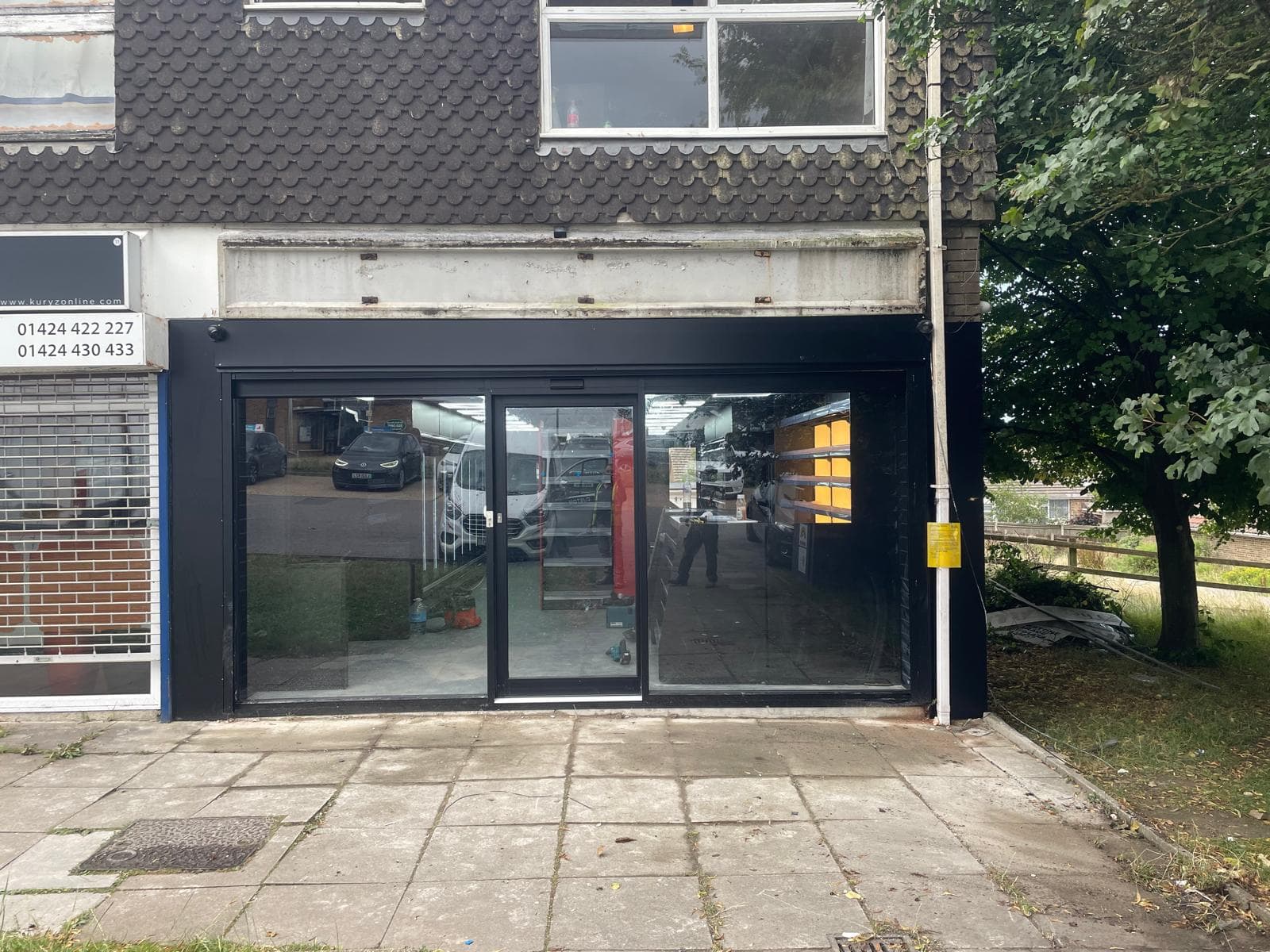
Steel or aluminium shutters and grilles, pulled by hand or electric, fitted anywhere in the UK. Solid shutters on the outside are the most common reason councils refuse a shopfront plan. So we start with shutters inside the glass, or open grilles you can see through, and only fit solid ones where the street allows it. Typical prices are £800–£1,500 for a hand-pulled shutter and £1,200–£2,500 for an electric one.
Typical prices
- Manual shutter£800 – £1,500Pulled up and down by hand
- Motorised shutter£1,200 – £2,500Electric, with a key switch or remote
- Fire-rated shutter£2,000 – £4,000Tested to stop fire spreading (BS EN 16034)
- LPS 1175-rated shutter£2,500 – £5,000Tested and certified against break-ins
Includes fitting. Your final price comes after we measure. What changes the price.
Your exact price: we visit, measure and quote in writing, free. Send a photo on WhatsApp
Why do councils refuse solid shutters?
A street of closed solid shutters looks dead after six o’clock. There is nothing to look at, no light on the pavement and no way to see inside. Councils link this to fear of crime and to graffiti. Most of the council guides we follow either ban solid outside shutters in conservation areas or allow them only in rare cases.
Shutters with small holes (perforated shutters) do not get round this. Several councils say clearly that they look almost solid when they are down.
Which shutters are easiest to get approved?
From easiest to hardest: an open grille inside, behind the glass; a mesh grille you can take down; an open grille on the outside; a shutter with clear see-through panels; a shutter with small holes; and a solid shutter. Where the box goes matters too. It should sit behind the sign board, not be fixed on the front of the building.
Colour is an easy win. A shutter painted to match the shopfront looks like part of it. Bare grey metal looks like an afterthought, and some councils say it is not acceptable.
Hand-pulled or electric?
Hand-pulled shutters suit narrow openings that are opened once a day. Wider or heavier shutters, or ones you open several times a day, should be electric. Electric shutters must meet a safety standard. It covers safety edges that stop the shutter if something is in the way, and safe stopping. These are required, not extras.
Do you need council permission?
- Planning permissionUsually needed
A shutter on the outside, with its box and side tracks, changes the look of the shop. A shutter inside, behind the glass, often does not need it.
- Listed building consentSometimes
Needed for any shutter on a listed building, even one fixed inside to old parts of the building.
- Building regulationsOccasionally
Mostly when a shutter closes off a fire exit or is part of a fire wall.
This is our general guide. Your council makes the final decision.
Safety standards
| Standard | What it covers |
|---|---|
| BS EN 13241 | The main product standard for shutters, and for commercial, industrial and garage doors. |
| BS EN 12453 | Safety of electric doors and shutters: closing force, safety edges and stopping. |
| LPS 1175 | A security test against break-ins. Older grades go from SR1 to SR8. The newer Issue 8 uses grades like B3 or C5: the letter is the type of tools used, the number is how many minutes it held out. |
| BS EN 16034 | Fire resistance, used with BS EN 13241 for fire shutters. |
Questions
Do I need planning permission for a roller shutter?
Do councils treat shutters with small holes differently from solid ones?
Related
- Shutter repairs — Stuck, noisy and broken shutters repaired within 100 road miles of Birmingham.
- Industrial shutters — Big steel and insulated roller doors for warehouses, workshops and loading bays.
- Aluminium shopfronts — Glass shopfronts in strong, painted aluminium frames, made to suit the building.
- Security doors — Strong steel doors for back, side and delivery entrances, tested against break-ins.